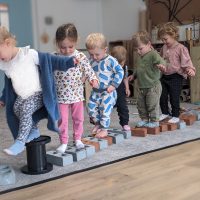
Hilltop Tots Day Nursery fully adopts the Early Years Foundation Stage (EYFS), a framework that sets rigorous standards for our practices.
We follow the reggio emilia curriculum offering a child-centered approach to early childhood education. We follow the idea that there are three teachers within the nursery, the teacher, the child themselves and the environment they are in, meaning the children are able to learn from their experiences and expand their learning. As a reggio emilia-inspired setting we focus on every child as an individual and support their personal development.
The four principles of the EYFS that guide us in the delivery of the EYFS curriculum are:

every child is a competent learner from birth who can be resilient, capable, confident and self-assured.
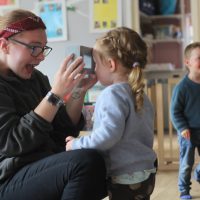
children learn to be strong and independent from a base of loving and secure relationships with parents and/or a keyperson
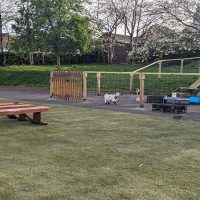
the environment plays a key role in supporting and extending children's development and learning.
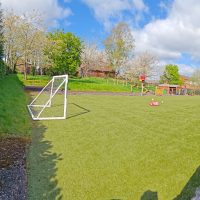
children develop and learn in different ways and at different rates and all areas of Learning and Development are equally important and inter-connected.
every child is a competent learner from birth who can be resilient, capable, confident and self-assured.
children learn to be strong and independent from a base of loving and secure relationships with parents and/or a keyperson
the environment plays a key role in supporting and extending children's development and learning.
children develop and learn in different ways and at different rates and all areas of Learning and Development are equally important and inter-connected.
Within the EYFS framework, there are Seven areas of Learning and Development, which help us to observe, plan and assess your child’s activities, based on their individual development, needs, wishes and feelings.
development involves giving children opportunities to experience a rich language environment; to develop their confidence and skills in expressing themselves; and to speak and listen in a range of situations
involves providing opportunities for young children to be active and interactive; and to develop their co-ordination, control, and movement. Children must also be helped to understand the importance of physical activity, and to make healthy choices in relation to food
involves helping children to develop a positive sense of themselves, and others; to form positive relationships and develop respect for others; to develop social skills and learn how to manage their feelings; to understand appropriate behavior in groups; and to have confidence in their own abilities
involves encouraging children to link sounds and letters and to begin to read and write. Children must be given access to a wide range of reading materials (books, poems, and other written materials) to ignite their interest
involves providing children with opportunities to develop and improve their skills in counting, understanding and using numbers, calculating simple addition and subtraction problems; and to describe shapes, spaces, and measure
involves guiding children to make sense of their physical world and their community through opportunities to explore, observe and find out about people, places, technology and the environment
involves enabling children to explore and play with a wide range of media and materials, as well as providing opportunities and encouragement for sharing their thoughts, ideas and feelings through a variety of activities in art, music, movement, dance, role-play, and design and technology